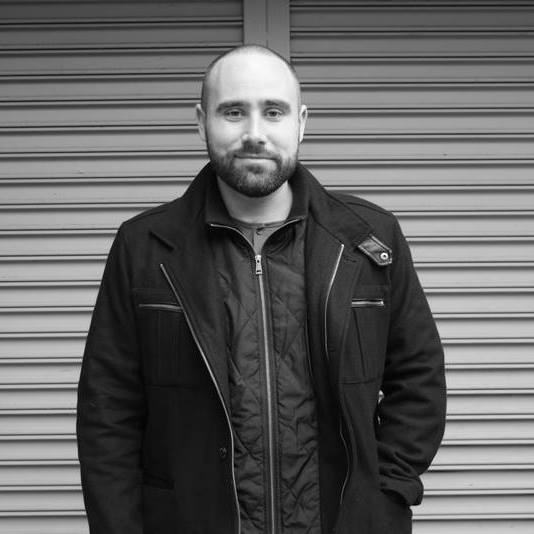
About me
I am an Assistant Professor (tenure track) at the Marxe School of Public and International Affairs, Baruch College, City University of New York (CUNY), and an affiliate of the CUNY Institute for Demographic Research. I am currently an Evaluation and Evidence Consulting Fellow with the Arnold Ventures Criminal Justice Evaluation Network.
I earned my Ph.D. in Political Science, specializing in methodology, in 2021 from Columbia University, where I was advised by Professors Donald P. Green, Macartan Humphreys, and Naoki Egami. From 2021 to 2023 I was a Postdoctoral Research Fellow at Harvard University, where I worked with Dr. Laura Hatfield on difference-in-differences and related methods for evaluating public policy.
Before starting my Ph.D., I received an M.A. from the University of Chicago and a B.A. from DePauw University. I also lived for two years in Uganda, where I worked as a research assistant. I currently live in the Bronx, but was born and raised in Brooklyn, New York.
Research interests
I develop statistical methods for causal inference in experimental and observational studies, much of that work motivated by the study of race and ethnicity in politics and public policy, across three connected themes:
Causal inference for the study of racial discrimination: Asking what an effect of race can be, and designing studies that recover the racial discrimination they claim to target. Topics include a family of race estimands that moves beyond the all-else-equal comparison usually defended as what credible inference requires, together with conditions, weaker than what the literature assumes, for recovering any member of that family; solutions to an overlooked asymmetry in exposure to racial cues in name-based audit experiments; bounds on effects in those audit experiments when message opening is mismeasured; and a framework for understanding racial disparity in police use of force that does not assume away one source of confounding while examining another.
Sensitivity analysis in observational studies: Asking how much a causal conclusion depends on unverifiable assumptions, and making design and modeling choices that reduce that dependence. Topics include a matching pipeline that treats the randomized experiment as a conceptual ideal and asks how inferences change when a matched design departs from that ideal; a sensitivity analysis for difference-in-differences that goes beyond approaches based on pre-trends, which can overstate how robust a conclusion is; model selection for difference-in-differences and other controlled pre-post designs, with the R package apm, on robustness rather than correctness, extending design sensitivity beyond the matched studies for which it was developed; and a sequential sensitivity analysis for the many applications where the assignment mechanism and sample selection interact, and so cannot be addressed one at a time.
Bayesian causal inference with randomization-based guarantees: Grounding Bayesian inference in the assignment mechanism, and asking what a Bayesian analysis gains or gives up by resting on that mechanism rather than on a probability model of potential outcomes. Topics include randomization-based Bayesian inference, whose credibility guarantees hold under minimal assumptions; the case for random rather than optimum assignment, made within a Bayesian framework instead of the standard significance-testing one; and ongoing work extending the statistical foundations of randomization-based Bayesian inference and drawing out its benefits for connecting design-identified estimands to substantive theory.
This work appears in the Annals of Applied Statistics, International Statistical Review, the Journal of Causal Inference, Observational Studies, Political Analysis, and Political Science Research and Methods.
Teaching
In addition to my regular teaching at the Marxe School, I have taught a causal inference course at the Inter-university Consortium for Political and Social Research (ICPSR) summer program since 2018, and a course on African politics at the City College of New York. I also teach the third course of the political science Ph.D. methods sequence at the CUNY Graduate Center and the second at Columbia University.